Emergency Car Recovery Dubai When You Need It
A stalled car on Sheikh Zayed Road, a dead battery in a residential parking garage, or a tire failure before an airport trip can disrupt far more than your day. Emergency car recovery Dubai drivers can rely on is about getting the vehicle, passengers, and next steps handled quickly – without guessing who to call or risking further damage.
A proper recovery service does more than tow a disabled vehicle. It identifies the immediate problem, sends the right technician or recovery vehicle, protects your safety at the roadside, and takes your car to the appropriate destination when a repair cannot be completed on-site. For busy professionals, families, and fleet operators, that level of coordination matters.
When to Call Emergency Car Recovery Dubai
Call for recovery when your car is not safe or practical to drive. Some issues can be solved where you are, while others need transport to a workshop. The right decision depends on the fault, your location, and the vehicle’s condition.
A flat battery, an empty fuel tank, a locked car, or a straightforward tire change may only require roadside assistance. A trained technician can assess the issue and, where possible, get you moving again. This is often faster and more cost-effective than arranging a tow when the car does not actually need one.
Recovery is the better option when the engine will not start after basic checks, warning lights indicate a serious fault, the vehicle has overheated, a tire has failed without a usable spare, or there has been an accident. Do not continue driving if you notice smoke, a burning smell, major fluid leakage, steering problems, reduced braking performance, or harsh transmission behavior. Driving a few more miles can turn a repairable issue into a much larger workshop bill.
In Dubai, location changes the urgency. A breakdown on a high-speed highway, near an active intersection, or in extreme afternoon heat requires a rapid response and clear safety judgment. Move only if the car can be moved safely. If not, prioritize your passengers, activate hazard lights, and arrange professional help.
What Fast, Professional Recovery Should Include
Not every towing provider offers the same level of care. A low advertised price may cover only basic transport, while essential requirements such as vehicle loading, waiting time, off-road access, or destination distance may be treated as extras. Ask what is included before dispatch whenever the situation allows.
Professional emergency support begins with accurate information. The service team should confirm your location, vehicle type, symptoms, and whether passengers are present. This helps send the correct equipment rather than delaying the job with a second visit.
For a dependable recovery experience, expect these essential steps:
- A 24/7 response channel for breakdowns outside normal workshop hours
- Clear confirmation of the service required and the starting price or expected charges
- A qualified technician or recovery operator equipped for your vehicle and location
- Safe loading and transport that avoids unnecessary strain on low-clearance, luxury, or damaged vehicles
- A practical next step, whether that is an on-site repair, a workshop inspection, or delivery to your preferred location
Live technician tracking can also make a real difference. It gives you visibility while you wait and removes the uncertainty of standing beside a disabled vehicle without knowing when help will arrive.
What to Do While You Wait for Help
Your first priority is personal safety, not diagnosing the vehicle. Pull over to the safest available position if the car remains drivable. Turn on hazard lights and keep a safe distance from moving traffic. On highways or busy roads, avoid standing between the vehicle and traffic.
If you are in a secure parking area, note the level, zone, entry point, or nearby landmark. In large communities, malls, and office garages, a precise location can save significant time. Share the vehicle make, model, plate number, color, and a simple description of the fault when you request assistance.
Do not repeatedly attempt to start a car that has overheated, has a suspected electrical fault, or has displayed a critical warning message. Do not open a hot radiator cap. If the battery is dead, a jump-start may be appropriate, but only when there is no indication of damaged wiring, burning odor, or leaking battery fluid.
Keep your phone charged where possible and have your vehicle documents accessible. If children, elderly passengers, or pets are with you, tell the dispatcher at the beginning of the call. The response team can then prioritize the situation appropriately.
Roadside Repair or Recovery: Which Is Better?
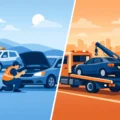
The best option is not always a tow. A mobile technician can often resolve common faults where the car is parked, including battery replacement, jump-starts, tire changes, fuel delivery, and some basic electrical checks. When the repair is safe and the needed part is available, on-site service gets you back on the road with minimal disruption.
Recovery is necessary when diagnostics point to an internal engine, transmission, cooling, brake, or suspension issue. It is also the sensible choice after a collision, even if the car appears to move. Hidden damage can affect wheel alignment, fluid systems, sensors, and structural components.
For premium vehicles, modified cars, and vehicles with very low ground clearance, the loading method is especially important. A professional operator should select equipment that protects bumpers, undertrays, wheels, and drivetrain components. This is one area where choosing the cheapest option can cost more later.
After Your Vehicle Reaches the Workshop
Recovery solves the immediate access problem. The next priority is finding the root cause before authorizing repairs. A workshop should inspect the vehicle, explain the fault in plain language, and provide a clear estimate for labor, parts, and any additional work recommended.
Ask whether the issue was a one-time failure or a sign of neglected maintenance. A dead battery, for example, may simply have reached the end of its service life. It can also indicate a charging-system issue, loose terminal, parasitic drain, or repeated short-trip use. Replacing the battery without checking the cause may leave you stranded again.
The same applies to tire failures. A puncture may be repairable, but sidewall damage, severe wear, bulges, or uneven tread often point to a need for replacement, alignment, or suspension inspection. Transparent advice separates urgent safety work from maintenance that can be planned for a later visit.
800 Shelby Garage combines rapid roadside support with workshop diagnostics, repairs, tires, batteries, oil changes, brake service, AC work, and structured maintenance plans. That means the team handling your emergency can also help prevent the next one, rather than sending you to multiple providers for each stage of vehicle care.
Reduce the Risk of Another Breakdown
No maintenance plan eliminates every emergency. Tires can pick up road damage, batteries can fail unexpectedly, and mechanical parts wear out. Regular checks do, however, reduce the chances of a disruption during a commute, school run, or long drive.
Pay attention to slow starts, dim lights, tire-pressure warnings, vibration, rising engine temperature, squealing brakes, and changes in AC performance. These are often early signals, not problems to ignore until the car stops. Scheduled oil changes, battery checks, tire inspections, brake-pad replacement, and diagnostics are generally easier to arrange than an unplanned recovery.
For households with multiple cars or businesses operating several vehicles, maintenance packages can make service intervals easier to track and budget. The right package depends on engine size, mileage, vehicle age, driving conditions, and manufacturer requirements. A 4-cylinder daily driver will not have the same needs as a high-mileage 8-cylinder SUV.
Keep a reliable 24/7 recovery contact saved before you need it, and treat warning signs early. When a breakdown does happen, fast professional action protects your time, your vehicle, and the people traveling with you.